



Well-being
November 25, 2025
Best Ways to Quit Smoking
A Fresh Start: Why Quitting Smoking Matters
Every cigarette may seem small, but the impact on your health adds up—fast. Cigarette smoking is the main cause of serious health risks associated with tobacco use. In fact, according to a study from researchers at University College London, each one can shave off nearly 20 minutes of your life. The good news? The moment you quit, your body begins to recover. There are many benefits to quitting, including improvements in both physical and mental health. Within days, you’ll breathe easier, feel more energised, and even start to enjoy food and scents more vividly.
Cigarette smoking is a major contributor to lung cancer, heart disease, and chronic obstructive pulmonary disease, but quitting significantly reduces your risk of developing these conditions. Stopping smoking also reduces your exposure to carbon monoxide and other harmful chemicals found in tobacco smoke, lessening the harmful effects on your body. And in the UK, where smoking remains the leading cause of preventable death, every step towards quitting truly counts. Plus, quitting means saving money that would otherwise be spent on cigarettes.
Combining Treatment and Support for Best Results
Going it alone can be tough, but you don’t have to. Research shows that combining behavioural support with medication significantly boosts your chances of success. The NHS offers brilliant stop-smoking services across the UK—think personalised quit plans, which include tailored advice designed to fit your individual needs. A personal quit plan is a key part of NHS support, making the quitting process more achievable. Many local pharmacies and GPs are also part of the effort, making help easy to find. The National Institute for Health and Care Excellence provides evidence-based guidance for quitting smoking. The NHS is committed to care excellence and health and care excellence in delivering stop smoking services. These combined approaches have helped many people quit smoking successfully.
Quit-Smoking Medications That Really Work

Nicotine replacement therapies (NRTs), such as nicotine patch, gum, lozenges, and nasal spray, are widely used to help people quit smoking. These nicotine products and nicotine replacement products serve as alternatives to cigarettes for managing withdrawal symptoms. The nicotine patch, for example, provides a slow, controlled release of nicotine to help reduce cravings and support long-term abstinence. All these therapies deliver nicotine in a controlled way, reducing cravings without the harmful effects of combustible tobacco.
E cigarette and e-cigarettes are also alternative nicotine delivery systems, offering a less harmful way to deliver nicotine compared to smoking, and can be as effective as other NRTs for some users. Evidence suggests that these therapies are effective in helping people quit smoking. These options are especially important for current smokers looking to quit, and have helped many people quit smoking. It’s always worth speaking to a healthcare professional to find what works best for you.
Quit Smoking Cold Turkey: Is It Right for You?
Quitting smoking cold turkey means stopping smoking abruptly, without the help of nicotine replacement therapy or quit smoking medicines. While some people find success with this approach, it’s important to know that quitting cold turkey can bring on intense nicotine withdrawal symptoms, such as irritability, strong cravings, and mood swings. These withdrawal symptoms can make stopping smoking feel especially tough, and the risk of relapse is often higher compared to using support or medication.
If you’re considering quitting smoking cold turkey, having a strong support system is key. Surround yourself with non smoking friends and family who can encourage you when things get tough. You can also reach out to your local stop smoking service for extra guidance and motivation. Even if you choose not to use nicotine replacement or stop smoking medicines, local stop smoking services and smoking advisors can offer practical tips and emotional support to help you stay on track. Remember, quitting smoking is a personal journey—choose the method that feels right for you, and don’t hesitate to seek help if you need it.
Exploring Alternative Nicotine Products
For some, quitting cigarettes doesn’t mean quitting nicotine altogether—at least not right away. Products like vapes, nicotine pouches, gums, strips, and lozenges can offer a potentially less harmful alternative. These options help satisfy cravings without exposing you to the tar and carcinogens found in cigarette smoke.
Vaping devices are popular for their fast-acting delivery and variety of flavours, while nicotine pouches provide a discreet, smoke-free option. Gums, strips, and lozenges release controlled doses of nicotine and are easy to carry on the go. While these products aren’t risk-free, many people find them useful during their quit journey—especially when paired with a solid plan and support system. If you are unsure of what to get, FREESMO offers a free product guide that can suggest the best alternatives based on your unique preferences.
Make a Solid Quit Plan
Having a plan makes quitting feel less overwhelming. Some people may choose to slowly reduce the number of cigarettes they smoke each day before their quit date to make the transition easier. Start by setting a quit date—ideally within the next week or two—and consider marking the day you smoke your last cigarette as a milestone in your journey. Visualizing the cost of five-cigarettes each day can also help you see the financial savings that come with quitting. Clean your space of cigarettes and lighters, and let friends and family know what you’re doing so they can cheer you on. Apps like the NHS Quit Smoking app are fantastic for tracking progress, giving you that extra boost when you need it most.

Using Nicotine Replacement Therapy Effectively
Nicotine replacement therapy (NRT) is a proven way to help you quit smoking by reducing cravings and withdrawal symptoms. NRT comes in several forms, including nicotine patches, nicotine gum, lozenges, and nasal sprays. Choosing the right product and dosage is important—nicotine patches deliver a steady level of nicotine throughout the day, making them ideal for long-term support, while nicotine gum and lozenges can be used to tackle sudden cravings as they arise.
To get the most benefit from nicotine replacement, always follow the recommended dosage and duration of use. Combining NRT with behavioral support, such as counseling or support groups, can further increase your chances of quitting successfully. If you’re unsure which nicotine replacement product is right for you, a healthcare professional or stop smoking advisor can help you create a plan tailored to your needs. With the right approach, NRT can make quitting smoking more manageable and help you stay smoke-free for good.
Mastering Cravings and Withdrawal

Cravings don’t mean failure—they’re a normal part of quitting. Managing nicotine cravings is a key part of quitting, and understanding your triggers can help you stay on track. Nicotine Replacement Therapy (NRT) can help manage these moments without exposing you to the harmful chemicals found in tobacco smoke and cigarette smoke. NRT provides nicotine without the toxic substances present in tobacco, which is the main source of addiction and health risks. Even people who have smoked for years can benefit from quitting, as stopping reduces your risk of serious health problems caused by cigarette smoke. A smart combo is using a patch (for steady support) and something fast-acting like gum or spray (for quick relief). Also, figure out your smoking triggers—then mix it up. Instead of lighting up after lunch, take a short walk or sip a glass of water. Make the decision to quit tobacco for better health and a longer life.
Overcoming Challenges on Your Quit Journey
Quitting smoking is a journey, and it’s normal to face challenges along the way. Nicotine withdrawal symptoms like irritability, anxiety, and cravings can be tough, but there are effective ways to manage them. Staying hydrated, getting regular exercise, and practicing relaxation techniques such as deep breathing or meditation can help ease withdrawal symptoms and keep you focused on your goal.
It’s also important to identify your personal smoking triggers—whether it’s having a cigarette after meals or during breaks—and develop strategies to avoid or cope with them. Support from local stop smoking services, healthcare professionals, or support groups can make a big difference, offering guidance and encouragement when you need it most. Remember, quitting smoking is a process, and setbacks are a normal part of the journey. With determination, support, and the right coping strategies, you can overcome the challenges and enjoy the many health benefits of a smoke-free life.
Build a Support Network That Lifts You Up
You're not in this alone. Support from friends, family, or co-workers can make a big difference. Better yet, join a stop-smoking group—online or face-to-face. Having someone to message when a craving hits can be surprisingly effective. Sometimes, just being heard is enough to stay strong.
Let Tech Help You Stay Smoke-Free

There are loads of smart tools out there to help you quit. From apps that track your smoke-free days to smartwatches that gently vibrate when they detect hand-to-mouth motions—technology gives you real-time support, motivation, and progress updates. Little nudges like these can really add up.
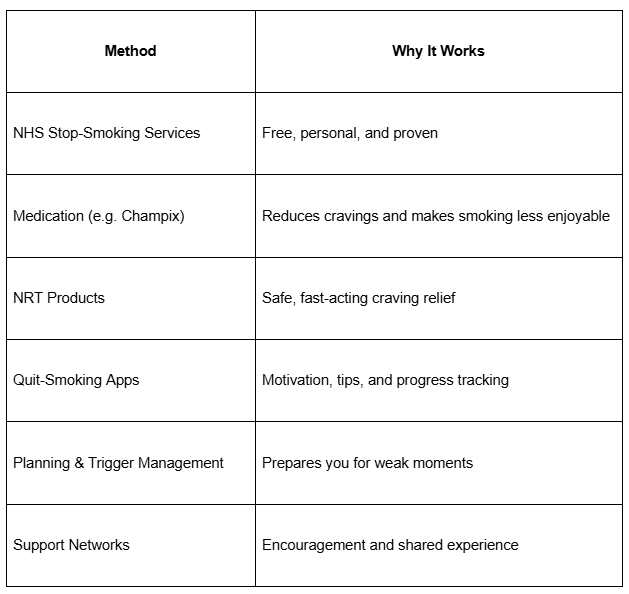
Summary Table: The Best Ways to Quit Smoking in the UK
Your Journey Starts Now
Quitting smoking isn’t easy—but it is 100% possible. With the right mix of planning, support, and tools, you can make it happen. Whether you’re ready to quit today or just exploring your options, there’s no better time to start than now.